Introduction
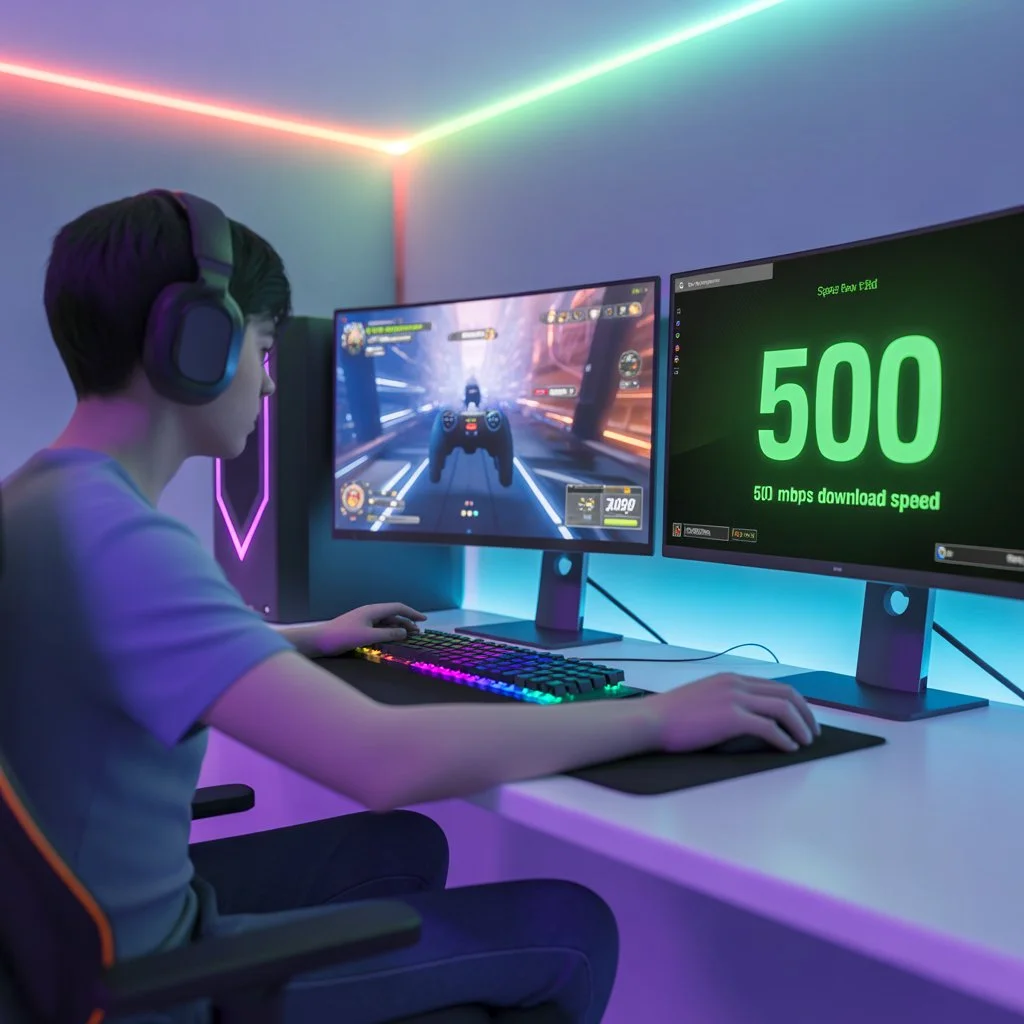
If you’re a gamer, you’ve probably wondered: is 500 mbps good for gaming? With so many different internet speed packages out there, it’s easy to get confused about what speed you actually need for smooth, lag-free gaming. Whether you’re into competitive first-person shooters or open-world RPGs, your internet speed can make or break your experience.
In this guide, we’ll break down what 500 Mbps really means for gaming, how much speed you actually need, and whether it’s worth paying for such a high-speed plan.
Understanding Internet Speed: What Does 500 Mbps Mean?
Before diving into gaming performance, it’s important to understand what 500 Mbps really represents. Mbps stands for megabits per second — the rate at which data is downloaded or uploaded through your internet connection.
A 500 Mbps connection means you can theoretically download 500 megabits (or about 62.5 megabytes) of data every second. To put that in perspective:
- You can download a 10 GB game in under 3 minutes.
- Stream 4K videos on multiple devices simultaneously.
- Host gaming sessions or live streams without buffering.
However, while 500 Mbps sounds impressive, gaming doesn’t require nearly that much bandwidth.
How Much Speed Do You Really Need for Gaming?
Most modern games require surprisingly low bandwidth. Here’s a quick overview:
| Type of Gaming | Recommended Download Speed | Recommended Upload Speed | Ping (Latency) |
| Online Multiplayer (PC/Console) | 3–6 Mbps | 1 Mbps | < 50 ms |
| Cloud Gaming (e.g., Xbox Cloud, GeForce NOW) | 15–40 Mbps | 10 Mbps | < 40 ms |
| 4K Game Streaming (Twitch/YouTube) | 20–50 Mbps | 10–25 Mbps | < 50 ms |
As you can see, 500 Mbps is far more than enough for any gaming scenario. Even if multiple players share the same network, you’ll still have plenty of bandwidth left.
Is 500 Mbps Good for Online Gaming? Absolutely. Here’s Why.
When you play online games, speed isn’t the only thing that matters — but it definitely helps. A 500 Mbps plan ensures smooth gameplay with no interruptions caused by bandwidth shortages. Let’s explore the main benefits:
1. Minimal Lag and Low Ping
While ping (latency) depends on factors like server distance and connection type, having a high-speed connection ensures that your network isn’t overloaded. This reduces lag spikes when others are streaming or downloading in your household.
2. Faster Downloads and Updates
Modern games are massive — often 100 GB or more. With 500 Mbps, downloading updates or full games takes a fraction of the time compared to slower connections. For example, a 100 GB game would take roughly 30 minutes or less to download.
3. Seamless Streaming and Voice Chat
If you’re streaming gameplay on Twitch or chatting with friends on Discord, you’ll need reliable upload speeds. Most 500 Mbps plans offer 20–50 Mbps upload speeds, making live streaming in 1080p or even 4K effortless.
4. Perfect for Multiple Gamers
Households with multiple gamers or devices benefit most from 500 Mbps. Even if several people are playing online, watching Netflix, or downloading content, your connection will stay stable.
Upload Speed: The Hidden Factor in Gaming
While download speed often gets the spotlight, upload speed is just as important for gaming. Upload speed determines how quickly your device sends data to game servers — crucial for real-time multiplayer games.
If your upload speed is too low, you might experience:
- Lag or delay in your character’s movement.
- Disconnections during matches.
Poor voice chat quality.
A 500 Mbps plan typically provides upload speeds between 20–50 Mbps, which is ideal even for competitive or streaming gamers.
Ping vs. Mbps: Which Matters More for Gaming?
Many people focus solely on Mbps, but ping (latency) is actually more critical for gaming performance.
- Ping measures how quickly your device communicates with the game server.
- Low ping (under 50 ms) means smooth gameplay and instant response times.
- High ping (over 100 ms) can cause lag, even if you have 500 Mbps.
To get the best of both worlds, use a wired Ethernet connection instead of Wi-Fi. It reduces packet loss and provides more stable ping results.
Is 500 Mbps Overkill for Gaming?
In most cases, yes — 500 Mbps is more than what gamers need. However, it becomes valuable if you meet certain conditions:
- You live in a household with 5+ heavy internet users.
- You regularly download or upload large game files.
- You’re a streamer or content creator who broadcasts in HD or 4K.
- You use cloud gaming services like GeForce NOW or Xbox Cloud Gaming frequently.
If you only play a few hours of online games daily and don’t share your network with others, a 100–200 Mbps plan would be sufficient.
Gaming on Wi-Fi vs. Ethernet: Does 500 Mbps Help?
Even with 500 Mbps, using Wi-Fi can still cause lag or packet loss, especially if the router is old or located far from your console or PC.
Here are a few tips to get the most from your 500 Mbps plan:
1. Use a Wired Connection
Connect your gaming device directly to the router using an Ethernet cable. It ensures consistent speed and lower latency.
2. Upgrade Your Router
Ensure your router supports Wi-Fi 6 or higher to take full advantage of 500 Mbps speeds.
3. Reduce Network Congestion
Avoid downloading large files or streaming in 4K while gaming. If you have smart home devices, schedule updates during off-peak hours.
4. Optimize Your Settings
Enable QoS (Quality of Service) on your router. This feature prioritizes gaming traffic for smoother gameplay.
Real-World Scenarios: 500 Mbps in Action
Let’s see how 500 Mbps performs in different gaming setups:
- Solo Gamer: Extremely fast downloads, zero lag, no buffering — more speed than you’ll ever need.
- Two Gamers + Streaming: Seamless gaming while one person streams in 4K and another downloads a game.
- Large Household (5+ Users): Multiple online games, HD streams, and video calls run without slowdowns.
In all these cases, 500 Mbps ensures a premium gaming experience with zero interruptions.
Cost vs. Performance: Is It Worth Paying for 500 Mbps?
Whether 500 Mbps is “worth it” depends on your lifestyle and usage habits. If you’re the only gamer in the house, a cheaper plan with 100–200 Mbps will perform just as well.
However, if your household includes multiple users, gamers, streamers, or smart home devices, investing in a 500 Mbps plan ensures long-term stability and future-proofing.
Also, ISPs often bundle faster plans with better upload speeds and lower latency — both crucial for gaming and streaming.
Key Takeaway
So, is 500 Mbps good for gaming?
Absolutely — in fact, it’s excellent. You’ll experience ultra-fast downloads, minimal lag, smooth streaming, and stable connections, even in high-demand households.
But keep in mind that ping, stability, and connection type (wired vs. wireless) affect your gaming experience more than raw Mbps.
If your goal is a lag-free, smooth, and reliable gaming setup, 500 Mbps ensures you’ll never have to worry about slow speeds again.