In the fast-paced world of enterprise operations, physical key management remains a surprisingly stubborn bottleneck. While businesses have digitized their payroll, inventory, and customer relationship management, many still rely on antiquated logbooks and pegboards to secure their most physical assets: keys. This “last mile” of security often leads to lost efficiency, expensive re-keying costs, and gaping security holes.
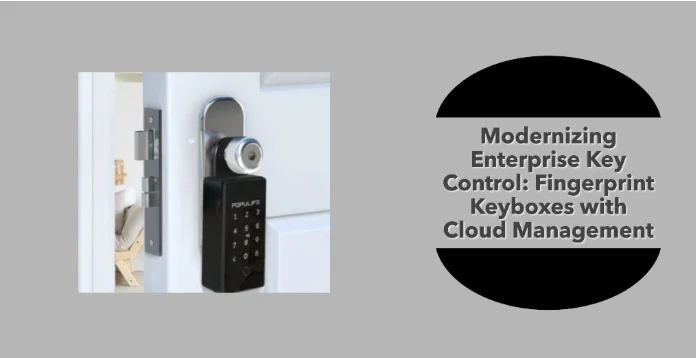
The solution lies in modernizing infrastructure with smart hardware that mirrors the sophistication of software systems. Enter the fingerprint smart keybox with cloud management—a tool that transforms a static metal box into a dynamic, data-driven access control node. By integrating biometric authentication with SaaS (Software as a Service) platforms, organizations can achieve a level of oversight and scalability that manual systems simply cannot match.
The Shift to Cloud-Native Key Management
Traditional key management is reactive. A manager typically only knows a key is missing when they go to find it. Cloud-native key control flips this dynamic to proactive management. By utilizing a smart keybox such as Populife offering, connected to a dedicated SaaS platform, facility managers gain a “control tower” view of every asset across multiple locations.
This centralization is critical for enterprises with distributed footprints, such as real estate agencies, car rental fleets, or logistics centers. Instead of physically visiting a site to audit keys, an administrator can log into a web portal to see exactly which keys are checked out, by whom, and for how long. The reference technology supports this shift by offering a spacious design capable of holding up to six keys or thirty keycards, making it a versatile hub for vehicle fleets or property access cards.
Scalable Security via API Integration
For a standalone device to be truly “enterprise-grade,” it must play well with others. The most advanced smart keyboxes today feature Open API capabilities, allowing them to integrate seamlessly with existing business software.
Imagine a scenario for a property management company: A guest books a viewing through a CRM system. Instead of a leasing agent manually generating a code and emailing it, the CRM triggers the smart keybox API to automatically generate a time-limited PIN valid only for the duration of the appointment. This automation eliminates human error, reduces administrative overhead, and ensures that access credentials are never left active longer than necessary. Integration capabilities effectively turn the keybox into a hardware extension of the company’s existing digital workflow.
Granular Access Control: Beyond the Master Key
One of the greatest risks in enterprise security is the “master key” problem—giving an employee total access simply because segmenting access is too difficult. Smart fingerprint keyboxes solve this through granular permission levels.
Modern devices support multiple authentication methods, allowing businesses to tailor access based on the user’s role:
- Permanent Staff: High-frequency users, such as security guards or shift managers, can be registered with fingerprint recognition. This ensures that the person unlocking the box is physically present and verified, preventing “credential sharing” that occurs with shared passwords.
- Temporary Contractors: For cleaning crews or maintenance workers, admins can issue time-limited codes. These codes function only during a specific shift window and expire immediately after, preventing unauthorized off-hours access.
- Urgent Access: In emergency scenarios, such as a pipe burst requiring immediate plumber access, admins can generate one-time passwords (OTP) remotely. These codes burn after a single use, maintaining high security even for ad-hoc events.
The Power of Audit Trails and Compliance
In regulated industries, it is not enough to secure keys; you must prove how they were secured. Paper logs are easily forged or lost, making them inadmissible for serious compliance audits.
Digital keyboxes automatically generate a rigorous, immutable audit trail. Every interaction with the device—whether it’s a fingerprint scan, a Bluetooth unlock via app, or a failed passcode attempt—is logged and synced to the cloud. This data is invaluable for incident investigation. If a vehicle is damaged or a property is accessed after hours, the administrator can pull the logs to pinpoint the exact individual responsible.
Furthermore, features like low-battery alarms (triggered at 20% capacity) and durable hardware (rated for 20,000 operations) ensure that the audit trail remains unbroken by power failures or maintenance neglect.
Conclusion
The days of the “honors system” for key checkout are over. As enterprises scale, the physical security of keys must evolve to match the digital security of data. By deploying fingerprint smart keyboxes with robust cloud management, businesses do not just secure their keys—they unlock new levels of operational efficiency, accountability, and peace of mind.