
Trying to decide between Grade 120 and Grade 100 chain slings for your lifting operations? Grade 120 delivers 50% higher working load limits than Grade 80 and 25% stronger capacity than Grade 100.
This makes it ideal for space-constrained lifts and high-frequency handling, while Grade 100 offers an excellent strength-to-cost ratio for standard overhead lifting applications.
Grade 100 chain slings work well for general construction and mining lifts if weight isn’t your main concern.
Grade 120 chain, on the other hand, gives you a 30% lighter chain with higher load capacity, which is effective when your teams handle slings repeatedly or work in remote locations where every kilogram counts during transport.
The choice depends on your working load requirements, manual handling frequency, and budget.
RUD Australia manufactures both grades at its Brisbane facility. Their versatile options help Australian operations choose the right lifting equipment for their specific needs.
This guide covers the material differences, AS 2321 compliance, and practical selection criteria so you can pick the right chain grade for your operation. Ready to learn which grade matches your conditions? Let’s get started.
What Makes Grade 120 Chain Different From Grade 100
Grade 120 uses specialised alloy steel and square link geometry that Grade 100 doesn’t have.
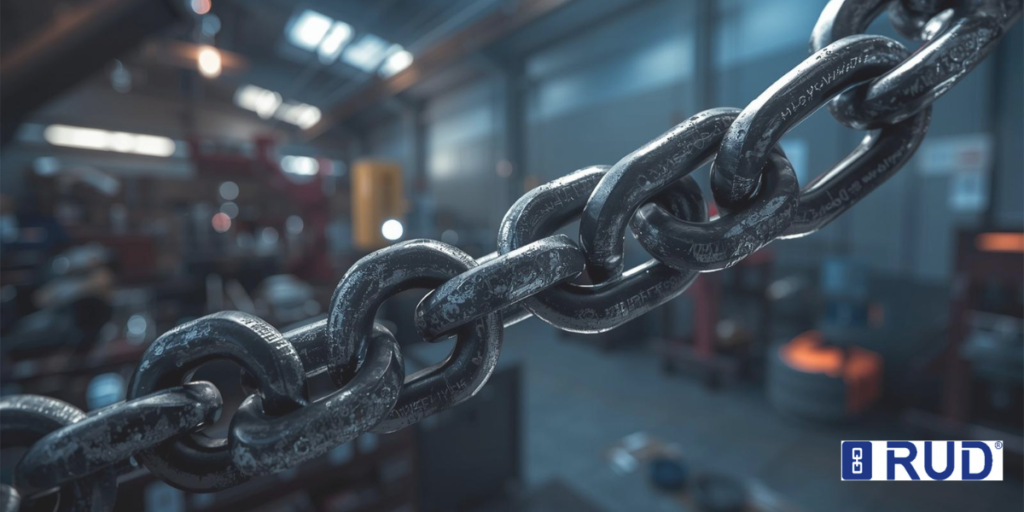
The alloy steel goes through precise heat treatment, creating 30% higher surface hardness. In abrasive conditions like mine sites or steel yards, your chain slings last longer before replacement.
The square link profile is where things get interesting. Grade 100 uses round links that create focused pressure points during lifts. In contrast, Grade 120’s square design spreads the load across larger bearing surfaces. This gives you better fatigue resistance over thousands of lifting cycles.
Take a 10mm Grade 120 chain as an example. It handles the same working load as a 13mm Grade 80, but weighs 30% less. Your rigging teams feel this when slinging up loads throughout the day, and the reduced weight means less physical strain on their bodies. This translates directly to fewer manual handling injuries on site.
The temperature range helps in Australian conditions, too. Grade 120 ICE chain works from -60°C to +300°C, handling cold-storage facilities and hot work near furnaces. SafeWork NSW requires chains to maintain capacity across operating temperatures, and this range covers most industrial applications.
Australian Standards and Compliance for Chain Grades
You need clarity on which Australian Standards apply to your chain grades before specifying equipment for your next lift. The compliance landscape breaks down into two areas: manufacturing standards and testing processes that verify safety requirements.
AS 2321 and AS 3775 Requirements
AS 2321 governs lifting chain manufacturing, setting material specifications and testing protocols. On the flip side, AS 3775 covers the assembled chain slings you use on-site. Both standards now include Grade 100 (designated as Grade V).
As a result, you have a clear compliance framework. Good to know: grade 120 doesn’t have a separate Australian certification yet, but it meets all Grade 100 standards for compliance purposes.
RUD Australia’s Testing and Certification
RUD Australia proof-tests every chain at its Brisbane facility before release. Each chain carries D1-12 stamping on the links, where D indicates quality degree, 1 identifies RUD as the manufacturer, and 12 confirms Grade 120.
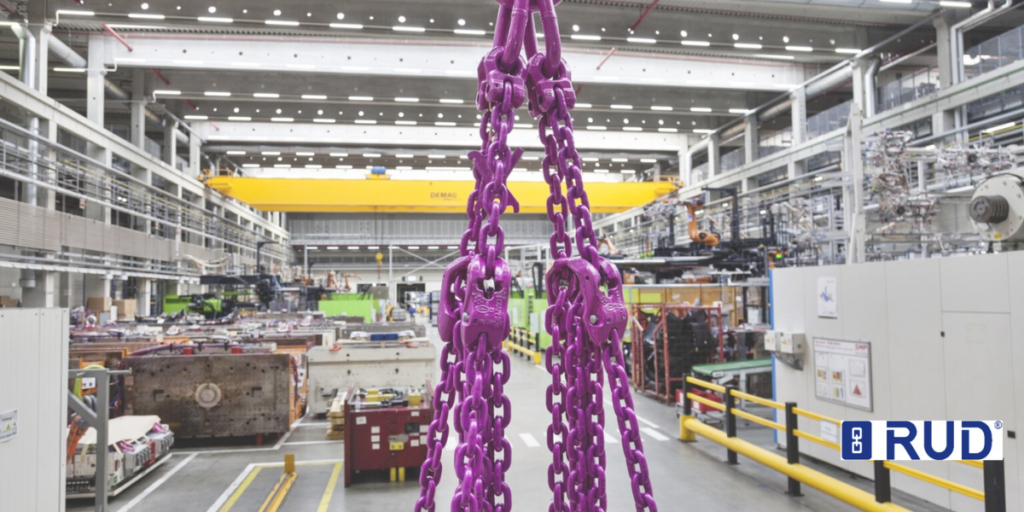
You’ll also notice the purple coating, which makes identification quick during inspections. This level of documentation and traceability meets Safe Work Australia guidelines for compliance audits.
When Grade 120 Chain Makes Sense for Your Operation
Your decision between Grade 100 and Grade 120 chain slings should match your working conditions and lifting frequency. Here’s where Grade 120 justifies its premium, and where Grade 100 remains the smarter choice.
Space-Constrained and Remote Operations
Smaller chain size helps where clearance becomes an issue. Offshore platforms, underground mining, and tight machinery installations need smaller diameter chains with higher capacity.
A 10mm Grade 120 delivers what you’d need a 13mm Grade 100 to achieve. It ultimately solves the clearance problems in confined spaces.
Let’s talk about the remote locations. They see transport savings from a 30% weight reduction. Helicopter lifts to mine sites cost around $3,000 per hour, so lighter equipment means more payload per trip. These savings add up quickly for FIFO operations.
High-Frequency Manual Handling
Your teams handling chain slings repeatedly throughout shifts see the biggest safety benefit. A 20-metre Grade 120 sling weighs 34kg compared to 50kg for Grade 100. That 16kg difference prevents fatigue when riggers sling up dozens of loads daily.
The Hazardous Manual Tasks Code of Practice 2021 from WorkSafe Queensland addresses cumulative strain from repetitive lifting.
When Grade 100 Makes More Sense
Standard construction, where slings stay in place, doesn’t justify Grade 120 costs. Stationary lifting points and infrequent lifts work fine with Grade 100, and the savings can go toward additional slings.
Master Links and Component Compatibility
Your existing hooks and master links need upgrading when switching to Grade 120. The square link geometry requires specifically rated components, and mixing grades isn’t safe. That’s why we suggest a budget for complete sling assemblies instead of chain-only replacement.
Practical Differences Between Chain Grades in Daily Use
If you’re switching from Grade 100 to Grade 120, you’ll notice changes in how your rigging teams work beyond what the WLL chart shows.
Purple coating changes to black above 300°C, giving you visual temperature exposure warnings during inspections. This coating helps you catch heat damage before it becomes a safety issue. When the coating turns brown-black, that chain needs immediate removal from service.
You need to calculate the diameter conversion since Grade 120 uses a smaller size for equivalent WLL. A 10mm Grade 120 replaces a 13mm Grade 100. What does it mean in particular, though?
Well, it means your storage racks might need reorganising. The weight difference becomes obvious when teams grab the wrong size.
What’s more, your existing hooks and master links may need upgrading for Grade 120 compatibility. The square link geometry doesn’t work with standard Grade 100 fittings. Contact RUD Australia engineers to assess which components need replacement for safe operation.
Making the Right Chain Grade Choice for Your Operations
Grade 120 chain meets your specific operational needs when weight savings and extreme-temperature capabilities suit your application. You should evaluate the total cost, including replacement frequency, handling safety, and operational conditions, before upgrading from Grade 100.
The decision comes down to matching chain grades with your working environment. Contact RUD Australia engineers for application assessment, ensuring AS 2321-compliant lifting solutions. Their Brisbane team provides engineered solutions built for Australian mining, defence, and infrastructure operations.