
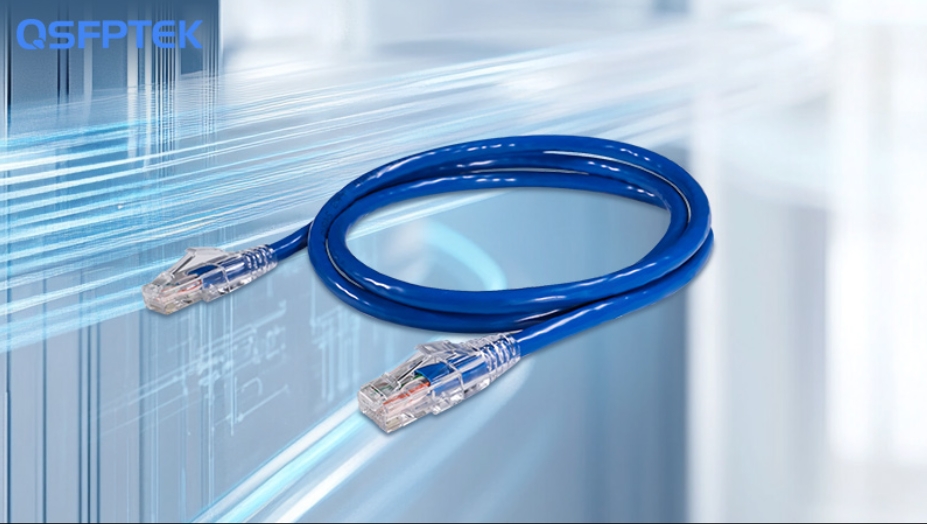
For years, Cat6 Ethernet cables have been the go-to choice for both home users and businesses seeking reliable, high-speed connectivity. Even as newer standards like Cat6a and Cat8 continue to emerge, Cat6 remains widely deployed across homes, offices, and even parts of modern data centers. But as we move deeper into 2026, with faster internet speeds, Wi-Fi 7 on the horizon, and growing demand for bandwidth-intensive applications, many users are starting to ask a simple but important question: Is Cat6 still enough, or is it time to upgrade?
The answer is not as straightforward as it may seem. While Cat6 still delivers strong performance in many scenarios, its limitations are becoming more noticeable in certain high-demand environments. Understanding whether it meets your needs today depends on how and where you use it.
What Cat6 Still Does Very Well
Reliable Performance for Gigabit and Beyond
Cat6 cables are designed to support up to 1 Gbps speeds over distances of up to 100 meters, and up to 10 Gbps over shorter distances, typically around 55 meters depending on installation quality and environmental factors. For most home networks and small office setups, this level of performance is more than sufficient. Streaming 4K video, participating in video conferences, gaming online, and transferring large files can all be handled comfortably within these limits.
In fact, even with the increasing availability of multi-gig internet plans such as 2.5G and 5G, Cat6 can still support these speeds in many cases, especially when cable runs are relatively short and properly installed. This makes it a cost-effective option for users who want better-than-gigabit performance without completely overhauling their infrastructure.
A Cost-Effective and Widely Compatible Choice
One of the biggest strengths of Cat6 is its balance between performance and cost. Compared to newer cable standards, Cat6 is significantly more affordable while still offering excellent performance for the majority of applications. It is also highly compatible with existing networking equipment, including switches, routers, and network interface cards that use standard RJ45 connectors.
Because of this, Cat6 continues to be a practical choice for upgrades or new installations where budget is a concern. It allows users to achieve stable, high-speed connectivity without investing in more expensive cabling systems that may not provide noticeable benefits in everyday use.
While Cat6 is widely compatible with networking equipment, it’s important to remember that different use cases require different cable solutions. For example, accessories like the 3ACBL-HBH9X-807 A40 Inline Mute Cable are designed for audio control rather than data transmission, emphasizing the importance of choosing the right cable for the right purpose.
Where Cat6 Starts to Show Its Limits
Distance Constraints at Higher Speeds
While Cat6 can technically support 10 Gbps speeds, this is only achievable over shorter distances. As cable length increases beyond approximately 55 meters, signal degradation and crosstalk become more significant, making it difficult to maintain stable 10G performance. This limitation can be a concern in larger homes, office buildings, or structured cabling systems where longer cable runs are common.
In contrast, newer standards like Cat6a are specifically designed to handle 10 Gbps over the full 100-meter distance, providing greater consistency and reliability in larger-scale deployments. This difference becomes especially important in environments where performance stability is critical.
Increasing Demand from Modern Applications
The way we use networks is evolving rapidly. Applications such as cloud computing, real-time collaboration, 8K video streaming, and AI-driven workloads are placing greater demands on network infrastructure. At the same time, technologies like Wi-Fi 6E and Wi-Fi 7 rely on high-speed wired backhaul connections to deliver their full potential.
In these scenarios, Cat6 may begin to act as a bottleneck, particularly when multiple high-bandwidth devices are operating simultaneously. While it can handle current demands in many cases, it may struggle to keep up as these technologies become more widespread.
Do You Actually Need to Upgrade in 2026?
For Home Users: Probably Not Yet
For most households, Cat6 is still more than capable of meeting everyday networking needs. Even in homes with smart devices, streaming services, and online gaming, the bandwidth provided by Cat6 is typically sufficient. Unless you are planning to deploy a full 10G network or require consistently high speeds across long cable runs, upgrading to Cat6a or higher may not deliver a noticeable improvement.
However, if you are building a new home network or planning a major renovation, it may be worth considering higher-grade cabling for future-proofing purposes. The cost difference during installation is often relatively small compared to the effort of upgrading later.
For Businesses: It Depends on Scale and Growth
In small and medium-sized businesses, Cat6 can still serve as a reliable foundation, especially if network demands are moderate and infrastructure is already in place. However, for organizations experiencing rapid growth, increasing data traffic, or adopting advanced technologies, the limitations of Cat6 may become more apparent.
Upgrading to Cat6a or even fiber-based solutions can provide greater scalability and ensure that the network can support future requirements. This is particularly relevant in environments such as data centers, high-density office spaces, and industries that rely heavily on real-time data processing.
Future Trends: Where Is Ethernet Cabling Headed?
The Shift Toward Higher Speeds and Fiber
As network speeds continue to increase, there is a clear trend toward higher-performance cabling solutions. Cat6a is becoming the new baseline for 10G deployments, while Cat8 is targeting specialized use cases that require even higher bandwidth over shorter distances. At the same time, fiber optics are gaining popularity due to their ability to support extremely high speeds over long distances with minimal signal loss.
Despite this, copper cabling like Cat6 is unlikely to disappear anytime soon. Its affordability, ease of installation, and compatibility ensure that it will remain relevant, particularly in cost-sensitive and smaller-scale environments.
A Practical Approach to Upgrading
Rather than rushing to replace existing infrastructure, many organizations are adopting a gradual upgrade strategy. This involves maintaining Cat6 where it is sufficient while introducing higher-grade cabling or fiber in areas that require improved performance. This hybrid approach allows for better cost control while still preparing for future demands.
Conclusion: Enough for Today, But Not Forever
Cat6 Ethernet cable continues to offer a strong balance of performance, cost, and practicality in 2026. For most users, it remains more than adequate for current networking needs, delivering reliable speeds and stable connections across a wide range of applications. However, its limitations become more noticeable as network demands increase, particularly in high-speed and large-scale environments.
Ultimately, whether you need to upgrade depends on your specific requirements. If your network is performing well and meeting your needs, there is no urgent reason to replace Cat6. But if you are planning for the future, especially in scenarios that demand higher bandwidth and greater scalability, considering an upgrade now could save time and resources in the long run.