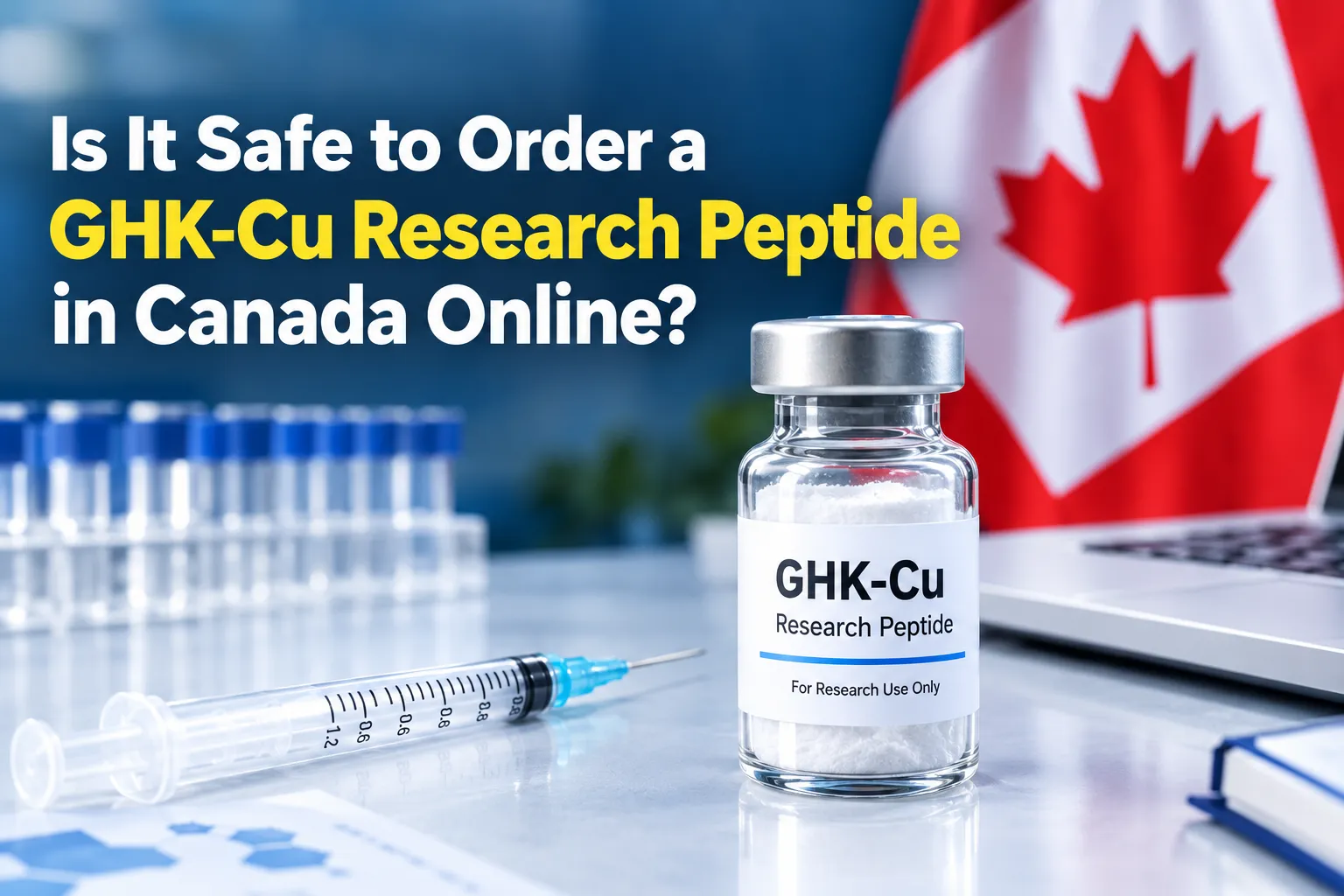
Ordering lab materials online is convenient, but it raises fair questions about safety. If you plan to buy a GHK Cu research peptide Canada suppliers sell over the internet, you should know what separates a careful vendor from a risky one. Safety here covers product quality, payment security, shipping, and legal compliance. This guide walks through each area so you can order with more confidence.
What “Safe” Really Means for Online Orders
When researchers ask whether online ordering is safe, they usually mean several things at once. Is the product what the label says? Is the website trustworthy with payment details? Will the package arrive in good condition? And does the purchase stay within Canadian rules?
The answer depends on the vendor. Online ordering is not risky by nature, but the market has a wide range of quality. Some sellers publish full testing data and follow research-only standards. Others cut corners and hope buyers do not ask questions. Your job is to tell them apart before you pay.
Product Safety: Verify What Is in the Vial
GHK-Cu is a small copper-binding peptide made of glycine, histidine, and lysine. Researchers study it in cell and animal models, and the findings from those models do not translate into claims about people. Because copper is part of the complex, quality control needs an extra step beyond a standard peptide.
Before you order a GHK Cu research peptide Canada vendors list online, ask for these documents:
- A batch-specific Certificate of Analysis (COA): The lot number should match the vial you receive.
- HPLC purity results: Many researchers look for 98% or higher.
- Mass spectrometry data: This confirms the peptide’s identity.
- Copper content information: It helps show the complex is intact.
- Independent lab details: Third-party testing is more convincing than a seller’s own numbers.
A quick sanity check also helps once the vial arrives. GHK-Cu powder is typically light blue because of the copper. A white powder under this label deserves questions, since it may be the copper-free peptide or a different product.
Website and Payment Safety
A vendor can have good products and still run a poor website, so look at the basics. The site should use HTTPS, which you can confirm by the padlock icon in your browser. It should list a real contact method, a privacy policy, and clear shipping and return terms.
Use payment methods that offer some buyer protection, such as a credit card. Be careful with sellers that accept only hard-to-trace payments or push you to pay outside the site. A legitimate business has no reason to hide how it takes money.
Also check how long the company has been operating and whether independent reviews exist outside its own pages. Feedback that is all glowing, all similar, and all posted on the vendor’s own site is a weak signal.
Compliance: Stay Inside Research-Use-Only Limits
In Canada, research peptides are sold for laboratory and educational use, not for human consumption. A responsible seller says so on the label, the product page, and in its policies. If a listing for a GHK Cu research peptide Canada buyers can order promises skin results, anti-aging effects, or any kind of treatment, treat that as a serious red flag. Those claims push a product outside legitimate research and can expose buyers to legal and safety problems.
Health Canada regulates drugs and health products, and cosmetic copper peptides fall into a separate category with their own rules. Researchers are responsible for knowing which regulations apply to their institution and project. When you are unsure, check with your compliance office before ordering.
Shipping and Handling Safety
Even a pure peptide can lose quality in transit. Heat, light, and moisture are the main threats. Ask the vendor where the order ships from, how long delivery usually takes, and how vials are packed. Sealed, labeled vials in protective packaging are a good sign.
Domestic shipping within Canada is often a better choice than importing, because it shortens transit time and avoids customs holds that can leave a parcel in a warm facility. When the package arrives, check that the seal is intact, the label shows the lot number, and the powder looks dry and uniform.
Store lyophilized vials cold, dry, and away from light. After reconstitution, divide the solution into small aliquots to avoid repeated freeze-thaw cycles, and log each lot number and opening date.
Test the Vendor Before You Buy
One simple step tells you a lot. Send a short email asking for the COA of a specific lot. A good supplier replies quickly with clear documents. A weak one avoids the question or goes silent. That response is a fair preview of how the company will treat you if something goes wrong after payment.
Warning Signs to Watch For
Walk away if several of these appear together:
- Missing, generic, or edited COAs
- Health or cosmetic claims on research product pages
- No business address or direct contact details
- Prices far below the rest of the market
- Countdown timers and fake scarcity banners
Key Takeaway
Ordering online can be safe when you verify first. Look for batch-specific COAs with HPLC and mass spectrometry data, confirm the lot number matches your vial, and check for copper content information. Use a secure website and protected payment method, make sure the listing is labeled for research use only, and favor vendors who answer questions openly. Evidence and transparency should always outweigh price and marketing.
Conclusion
Online ordering works well when you treat it as a process of checking, not trusting. Documentation, honest labeling, secure payment, and careful handling will protect both your results and your budget. Keep this list nearby each time you evaluate a GHK Cu research peptide Canada researchers can rely on. If you want a Canadian source that emphasizes quality and clear documentation, PŪR Research is a good place to start.
Frequently Asked Questions
1. Is it safe to buy research peptides online in Canada?
It can be, if the vendor provides batch-specific testing, clear labeling, and secure checkout. Always verify before you pay.
2. What document proves a peptide’s quality?
A batch-specific Certificate of Analysis with HPLC and mass spectrometry results. The lot number must match your vial.
3. Why is GHK-Cu powder blue?
The color comes from the copper ion bound to the peptide. White powder may be the copper-free version or another product.
4. Is research-grade GHK-Cu the same as cosmetic copper peptide?
No. Cosmetic products are a separate category with different rules. Research-grade material is for laboratory use only.
5. How should I store GHK-Cu after it arrives?
Keep lyophilized vials cold, dry, and away from light. After reconstitution, use small aliquots and avoid repeated freezing and thawing.