Not so long ago, prized items were often kept in closets and storage bins. Today, they are moving into the main living areas, becoming important to a room’s story. This shift is more than just an aesthetic choice; it’s a powerful combination of pride, preservation, and practicality. This cultural change, combined with a growing home-styling market, is fueling demand for well-built cases and wall systems that showcase collectibles without compromising their safety or value.
The Rise of Protective Presentation For Collectibles
The need for intentional, integrated, and protective storage solutions is emerging from a massive market trend. Analysts at Grand View Research forecast the global home décor market (the category encompassing styling solutions) to approach $1.62 trillion by 2030, reflecting a strong 9.4% compound annual growth rate (CAGR) through the back half of the decade. This growth, increased by rising urbanization and discretionary income, is visible globally: people want storage that features integrated lighting and actively preserves the condition of their items.
This is the clear purpose of high-quality card frames, multi-slot cases, and instrument displays; they simultaneously solve for beauty and preservation.
How Trading Cards Turned Into Everyday Art Pieces
The scale of the trading card market has moved far beyond niche status. The hobby saw an unmatched surge in activity, with eBay recording a 142% year-over-year jump in domestic trading-card sales in 2020, followed by $2 billion in transactions for the category in just the first half of 2021.
As the market matured, the infrastructure followed. Services like the eBay Vault and the extension of Authenticity Guarantee to graded cards have confirmed their status. Collectors now treat their best pieces like legitimate financial assets. That shift has made Pennzoni Display a staple among serious collectors, offering UV-safe acrylic and precision sizing to match PSA and BGS slabs. As a result, everyday favorites are leaving their boxes to occupy wall space in frames, on rails, and in temperature-controlled display cabinets.
Precision Matters for Card Displays
To ensure display products remain frustration-free, construction must follow to the precise standards of the grading hobby.
| Component | Standard Dimension | Key Detail |
| Standard Trading Card | 2.5 × 3.5 inches | The foundational size for nearly all sports and TCG cards. |
| PSA Slab (Standard Holder) | 3.16″ wide × 5.32″ tall × 0.27″ thick | These are the common exterior dimensions for a standard graded slab. |
Manufacturers must also account for PSA’s specialized holder families (like Tall Boy or Jumbo). A small tolerance around display openings is crucial to prevent binding, marking of edges or labels, and issues related to plastic expansion from humidity.
How To Protect Collectibles From Light And UV Damage
Preserving paper artifacts and inks requires managing their exposure to light and harmful materials. Museum practice offers the best guide for creating safe living displays:
Light and Glazing
- Lighting: Keep lighting modest. Conservation references recommend a maximum of ~50 lux measured at the object’s surface for very light-sensitive items (such as paper and prints). For less sensitive items, up to ~100 lux is sometimes acceptable.
- UV Reduction: Use LED fixtures because they emit virtually no harmful Ultraviolet (UV) radiation compared with daylight and older lamp types. Incorporate dimmers or timers to control exposure.
- UV-Filtering Acrylic: Use glazing that actively screens out UV. Products like Acrylite OP-3 block roughly 98% of UV, and Tru Vue Optium Museum Acrylic is rated for approximately 99%. This prevents fading and paper cracking.
Archival Materials
Any material in direct contact with cards (e.g., sleeves, gaskets) must avoid PVC. PVC can release chemicals and acidic by-products that cause long-term, permanent damage. Archival authorities consistently recommend:
- Polyester (PET)
- Polypropylene (PP)
- Polyethylene (PE)
When marketing uses the term “archival,” look for confirmation of these specific, safe plastics.
Why More Guitar Owners Display Instruments At Home
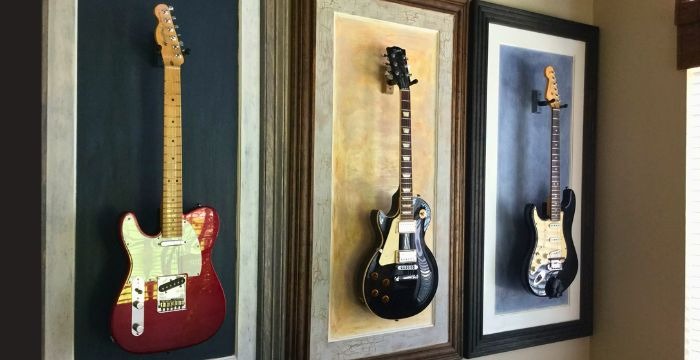
Musical instruments have followed a similar cultural trend toward display. A joint study by Fender and YouGov estimated that about 16 million Americans picked up the guitar during 2020–2021. This larger player base means more households have instruments that require secure, visible storage. Wall-mounted hangers and a Guitar Display Case have become fixtures because they elevate a practical object to a focal point without compromising care.
A Guitar Wall That Pleases Luthiers
Wood, finish, and glue are highly sensitive to changes in air or temperature. Small decisions regarding display are critical:
- Humidity and Temperature: Leading manufacturers like Taylor and Martin advise maintaining 45-55% relative humidity (RH) and a temperature of ~72–77°F (22–25°C). This range minimizes the risk of cracks, swelling, and loose joints. A digital hygrometer is essential for monitoring these conditions.
- Finish Compatibility: Hangers are generally safe for modern polyurethane finishes. However, nitrocellulose lacquer (common on vintage-style instruments) is highly reactive. The contact material on the hanger must be confirmed or protected with a barrier felt specifically designed for nitrocellulose.
- Lighting and Mounting: As with cards, LED lighting is preferred to keep UV low and surface temperatures stable. Always anchor wall mounts securely into studs and ensure the yoke design distributes the instrument’s weight properly. Display cabinets, often fitted with a compact humidifier, are the best solution for stabilizing humidity.
What Your Customers Secretly Ask Before They Click “Buy”
Search shows that shoppers consistently have the same four core questions. Specific product page copy that directly addresses these questions builds trust and reduces returns:
| Shopper Question | Specific Answer to Provide |
| “Will it fit my slab?” | Publish the exact opening dimensions and name the common holders it accommodates (e.g., “fits PSA thin holder 3.16” \ 5.32”). |
| “Will the light fade my items?” | Detail the use of dimmers and UV-filtering acrylic (e.g., 98% UV block), explaining the benefit as “slower fading and better paper health” due to less UV and lower heat. |
| “Is it archival?” | Specify PVC-free contact surfaces and list the approved materials: PET, PP, and PE. Offer a link to a material data sheet if available. |
| “Is the hanger safe for my finish?” | Clearly state finish compatibility, especially confirming if it is safe for nitrocellulose lacquer. |
By combining strong design with sound conservation practice, display solutions earn their place by honoring the object’s identity, protection, and design.
Summarized Thoughts
What makes these products durable in the market isn’t a passing design fad; it’s a triangle of identity (you love the object), protection (you preserve condition and value), and design (the piece completes the room). Growth in home styling supplies the budget, the trading-card industry and authentication services normalize treating collectibles like assets, and the expanded guitar community ensures instruments will remain part of daily life rather than occasional guests. When you combine those forces with sound conservation practice, you get displays that look refined today and keep valued items ready for tomorrow.