
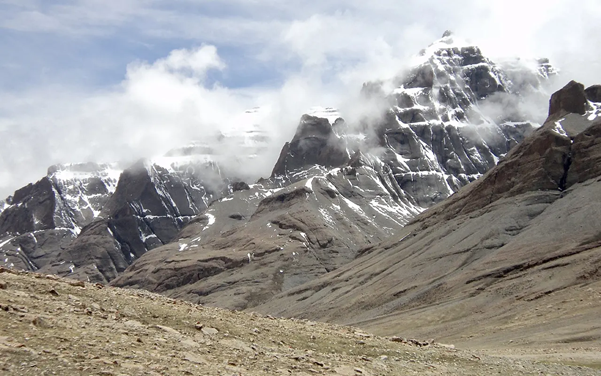
The Mount Kailash Trek is one of the most sacred and mysterious journeys in the world. Kailash is a mountain in the far western part of Tibet with a height of 6,638 meters (21,778 feet) and is regarded as sacred in the Hindu religion, Buddhism, Jainism, and the Bon. Each year, thousands of pilgrims and trekkers come here to complete the blessed circle known as the Kailash Kora, which is a journey that is said to be spiritually purifying and also a blessing.
Besides being a spiritual journey, the trek is also physically and mentally demanding. Many travelers who consider this journey often wonder whether it is suitable for beginners or if it is only meant for experienced trekkers.
The article is a guide to Mount Kailash Trek, as it explains the true amount of difficulty, the terrain, and altitude issues, along with what you are actually going to expect.
Understanding the Mount Kailash Trek Route
The Mount Kailash Trek is a circling pilgrimage path around the mountain, which is called the Kora. The entire circuit measures approximately 52 kilometers (32 miles) and takes 3 days on average.
The trek starts at a small town called Darchen at an elevation of circa 4,575 meters (15,010 feet) above sea level. It is here that trekkers begin on a trail that goes around Mount Kailash through high valleys, rocky tracks, and mountain passes.
The hardest part of the trek is the Dolma La Pass, which is about 5,630 meters (18,471 feet). This marks the highest point of the trek, and this is what makes this journey a challenge.
The distance is not very long; however, the altitude, the terrain, and the weather conditions make the experience much more challenging than an average trekking path.
The Biggest Challenge: High Altitude
The first factor that dictates the difficulty of the Mount Kailash Trek is the altitude. The trek starts at a height that is already greater than many famous trekking destinations.
In Darchen at 4,575 meters (15,010 feet), there is a severe lack of oxygen as compared to the sea level. As the trekkers increase in altitude to Dolma La Pass, which is 5,630 meters (18,471 feet), the oxygen content in the air only gets lower. This may result in altitude sickness, also known as the Acute Mountain Sickness (AMS).
The usual symptoms are headaches, light-headedness, nausea, fatigue, and shortness of breath. These symptoms can be experienced even by physically fit people, as the altitude treats every person differently.
This is the reason why most travel arrangements spend days acclimatizing before the Kailash Kora. Overnight places like Lhasa, which is approximately 3,650 meters (11,975 feet), and Lake Manasarovar, which is approximately 4,590 meters (15,060 feet), have a gradual effect on the body to adapt to elevated altitudes.
Any guide to Mount Kailash Trek highly suggests that acclimatization is necessary in order to minimize the health risks and enhance the overall experience of the trekking activity.
Terrain and Trail Conditions
The other element that makes the Mount Kailash Trek challenging is the terrain. The path is not very technical, which implies that climbers do not require ropes or high-level skills during the trek. Nevertheless, the trails will be physically challenging and rough.
Most of the path is composed of rocky terrain, loose gravel, and rough roads. In addition to that, the trekkers are required to cross mountain pass that is quite high and steep.
The second day of the trek, crossing Dolma La Pass, which is 5,630 meters (18,471 feet), is the most difficult. It is slow and steep up to the pass, particularly owing to the thin air. Once they get to the pass, trekkers have to go down a rocky and at times slippery trail.
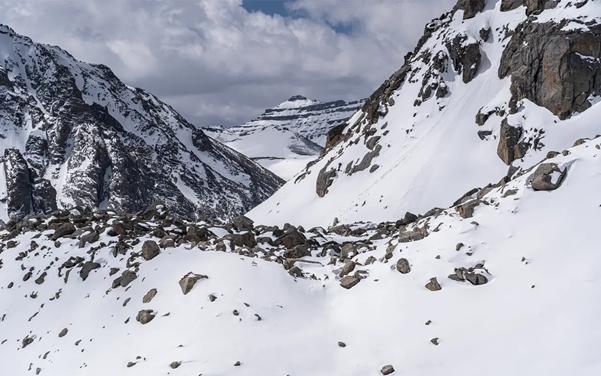
There is also a possibility of snow and ice, which will be a further obstacle, as it depends on the season. Notwithstanding these difficulties, the path can be overcome by the majority of trekkers with a slow pace and a will.
Weather and Environmental Conditions
Tibet plateau is very unpredictable in terms of weather. During the trekking season, which usually runs from May to September, temperatures can change a lot throughout the day.
During the day, temperatures can rise up to 10 °C to 15 °C (50 °F to 59 °F), and at night, they can be lower than 0 °C (below freezing point), particularly on high altitudes. There is also a high probability of strong winds in the area.
Trekking can be complicated due to the sudden changes in the weather. A bright morning may soon be changed to a windy afternoon or even light snowfall near the higher passes.
Due to such conditions, the guide of the Mount Kailash Trek always focuses on proper packing with layers of clothes. Easy-to-wear warm jackets, windproof gear, and gloves are needed to ensure that one remains comfortable on the trek.
Physical Fitness Requirements
It is a myth that the Mount Kailash Trek requires high levels of trekking experience, which is not quite true. Traffic is difficult physically, but it does not require technical climbing skills.
A moderate degree of physical conditioning is normally adequate. Endurance, patience, and the ability to walk several hours a day at high altitude are the most important qualities.
The three-day circuit for the trekkers is usually a 5-8-hour day of walking per day. Due to the elevation, it is not fast but slow and gradual in pace.
Good preparation can make a big difference. Hiking, cardio exercises, and lengthy walks are some of the activities that contribute to enhancing stamina and breathing capacity prior to the trip.
All the people considering the trip need to spend several weeks working on their fitness level to have a safer and more entertaining experience.
Mental and Emotional Challenges
Mount Kailash Trek is not only physically challenging but also mentally challenging. The distant surroundings, lack of amenities, and elevated altitude may challenge the patience and will of a traveler.
During the trek, accommodation is normally in basic guesthouses or simple lodges. In some places, the facilities may be very basic, with shared rooms and little or no heating.
You might feel exhausted by walking long hours, are coupled with the thin air. Trekkers must keep their minds in high spirits and have a positive attitude during the journey.
Meanwhile, the experience is highly rewarding to many individuals. The spiritual ambience of Mount Kailash and the breathtaking Himalayan views make one experience a strong feeling of accomplishment.
The pilgrims and travelers who make it around the mountain make it a memory of a lifetime.
Who Should Attempt the Mount Kailash Trek?
The Mount Kailash Trek can be completed by many types of travelers, including pilgrims, adventure seekers, and cultural travelers. Age does not make a difference in whether one will be able to complete the trek or not. A large number of elderly pilgrims make it through the Kora on an annual basis.
Nevertheless, people who have serious heart problems, breathing problems, or a considerable altitude sensitivity need to pay attention to the advice of a doctor before making the trip plans.
With adequate training, having the right attitude, and being able to acclimatize gradually, the journey can be made by most people.
The experience can also be safer and more comfortable if you follow a guide for the Mount Kailash Trek, join an organized tour and travel with experienced guides.
Is the Mount Kailash Trek Worth the Difficulty?
Even with the challenges, many trekkers say the Mount Kailash Trek is one of the most meaningful trips they have ever taken.
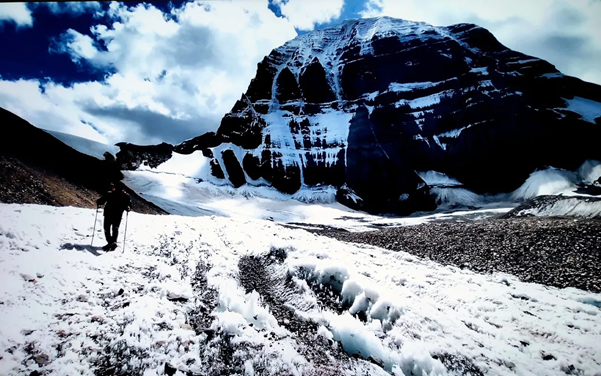
The walk is a spectacular experience of the Tibetan plateau, dramatic valleys and the famous pyramid-shaped mountain Kailash soaring to 6,638 meters (21,778 feet). On the path, colorful prayer flags, old monasteries and spiritual pilgrims make the atmosphere unique and cultural.
It is also believed that the journey around the sacred mountain cleanses the sins of the past and generates spiritual merit. Regardless of whether a person comes to see the site out of religious motives or adventure, the feeling of accomplishment after completion of the trek is unforgettable.
Final Thoughts
So, what is the difficulty of the Mount Kailash Trek?
Simply put, it is moderately challenging, primarily due to the altitude level, as opposed to the distance covered in the trek. The path does not involve any technical climbing, but the thin air, a steep pass, and fluctuating weather can make the journey difficult.
Most of the travelers can pass the trek successfully with proper acclimatization, physical preparation, and a positive mindset.
This is a realistic explanation that would become a guide to the Mount Kailash Trek so that travelers can know what to expect in this holy journey of the Himalayas. The trek is not only manageable but also incredibly inspiring to those who do the preparation and take great care of the conditions of the high-altitude setting.