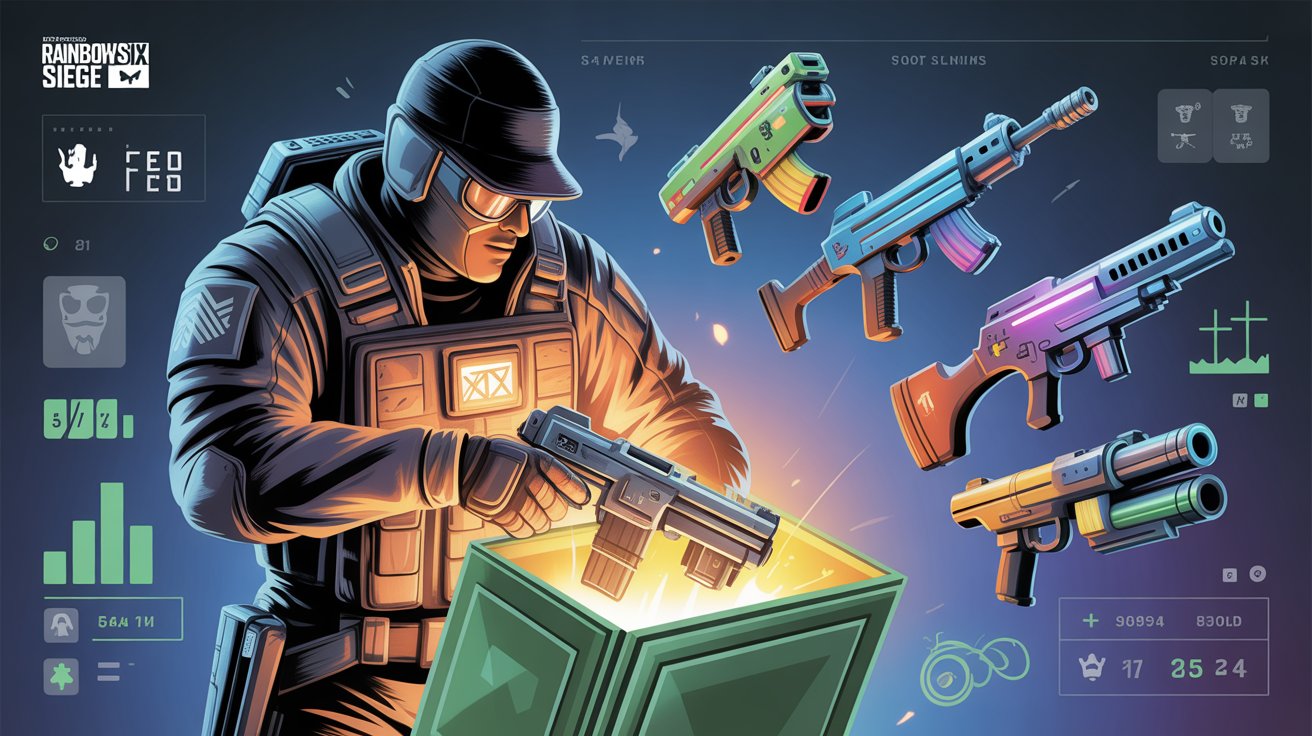
Rainbow Six Siege skins feel cosmetic, but they behave like assets.
A skin has no damage bonus. It does not change recoil. Yet players chase certain drops like they matter. Prices rise. Listings vanish. “Sold out” becomes a status marker.
The reason is simple: scarcity.
Scarcity in R6 comes from two places. First, RNG—random drops from packs, events, and rewards. Second, supply limits—time-gated content, discontinued items, and limited runs. Put those together and you get a market where perceived value can spike fast.
This article explains how that system works. We will break down RNG, drop pools, and demand behaviour in plain terms. We will treat skins as a digital economy with rules, not as a mystery.
How RNG Creates Artificial Rarity
At the core of the R6 skin economy sits RNG—random number generation.
When you open an Alpha Pack, the outcome feels personal. In reality, it follows a probability table. Each skin sits inside a drop pool with a fixed chance. Most items are common. A few are rare. A tiny fraction are legendary.
This structure creates artificial rarity. The item is not rare because it exists in small numbers globally. It is rare because the drop rate is low. The system controls the faucet.
Players react to low probability the same way viewers react during a tight match. Think of the tension when watching cricket live india in the final over. The outcome hangs in balance. The uncertainty creates energy. RNG works the same way. The reveal animation builds suspense. The low odds amplify the result.
When a rare skin drops, it feels earned, even though chance drove it. That emotional charge increases perceived value.
Over time, players learn which items sit at the top of the rarity ladder. They track colour tiers. They compare drop percentages. The rarer the pool, the stronger the demand.
RNG does not just distribute cosmetics. It manufactures scarcity through probability.
Limited-Time Events And The Supply Freeze
RNG controls drop rates. Time limits control supply.
Seasonal events introduce exclusive skins tied to short windows. Once the event ends, the drop pool closes. No new supply enters circulation. The faucet shuts off.
This freeze changes the equation. During the event, supply grows as players open packs. After the event, supply stays fixed. Demand, however, can rise.
Players who missed the window search later. New players join the game. Content creators showcase rare cosmetics. Interest expands while availability stays static.
This pattern mirrors limited retail drops. A product launches for a week. Buyers hesitate. Once it disappears, resale demand increases.
In R6, discontinued skins often gain prestige. Not because they look better, but because they signal timing. Ownership proves participation in a past season.
Scarcity through time feels different from scarcity through probability. Probability creates tension at the moment of opening. Time creates pressure before the window closes.
Together, they reinforce value. Random drops create excitement. Limited duration creates urgency.
Demand Follows Status, Not Utility
R6 skins do not improve performance. They change appearance. Yet some cosmetics command far more attention than others.
Demand flows toward status.
Players value skins that signal rarity, timing, or exclusivity. A discontinued elite skin tells a story. It says, “I was here.” That narrative carries weight in ranked lobbies and esports streams.
Utility does not drive price. Visibility does. If a popular streamer equips a rare operator set, demand rises. If a skin appears during a major tournament broadcast, interest spikes.
This behaviour mirrors fashion markets. A hoodie becomes valuable when limited and publicly worn. The fabric stays the same. Perception changes.
In R6, perception shapes marketplace movement. Players want items that stand out in the operator selection screen. They want cosmetics that draw attention during match intros.
Demand, then, tracks identity. The rarer the skin, the stronger the signal.
Scarcity alone does not guarantee value. Scarcity plus visibility creates momentum.
Market Volatility And Update Cycles
Scarcity sets the stage. Updates move the market.
When Ubisoft buffs an operator, demand for that operator’s cosmetics often rises. More players use the character. More players want matching skins. Supply does not change, but attention does.
The reverse also happens. A nerf reduces playtime. Interest fades. Listings increase. Prices soften.
Esports events amplify this effect. If a pro team wins with a specific operator loadout, viewers replicate the setup. Cosmetics linked to that operator gain exposure. Exposure increases demand.
Marketplace behaviour reacts quickly. Listings disappear within hours during spikes. Prices adjust upward. After hype cools, movement slows.
This volatility resembles a live trading board. Information travels fast. Perception shifts faster.
R6’s digital economy does not move randomly. It responds to patches, events, and community focus.
Scarcity creates baseline value. Updates create swings.
The Long Game: Why Scarcity Sustains The R6 Economy
Short-term spikes grab attention. Long-term scarcity sustains value.
As seasons pass, older cosmetics drift further from circulation. Fewer players own them. Fewer listings remain active. Each year adds distance. Distance adds prestige.
New players enter the ecosystem without access to past event drops. Their only path to ownership runs through resale. This keeps demand alive even as the game ages.
Ubisoft understands this balance. It introduces fresh skins to maintain engagement while preserving the exclusivity of older sets. If every discontinued item returned regularly, scarcity would weaken. The economy would flatten.
Instead, the system relies on controlled supply. Limited drops. Rotating pools. Event exclusives. These mechanics ensure that some items always sit out of reach.
The result is a layered market. Common skins trade steadily. Event items fluctuate. Legacy cosmetics hold long-term value.
RNG generates excitement. Time limits restrict supply. Visibility drives demand. Updates trigger volatility. Together, these forces create a functioning digital economy.
R6 skins may be cosmetic, but their value follows clear economic logic.
Scarcity, not power, drives the marketplace.