
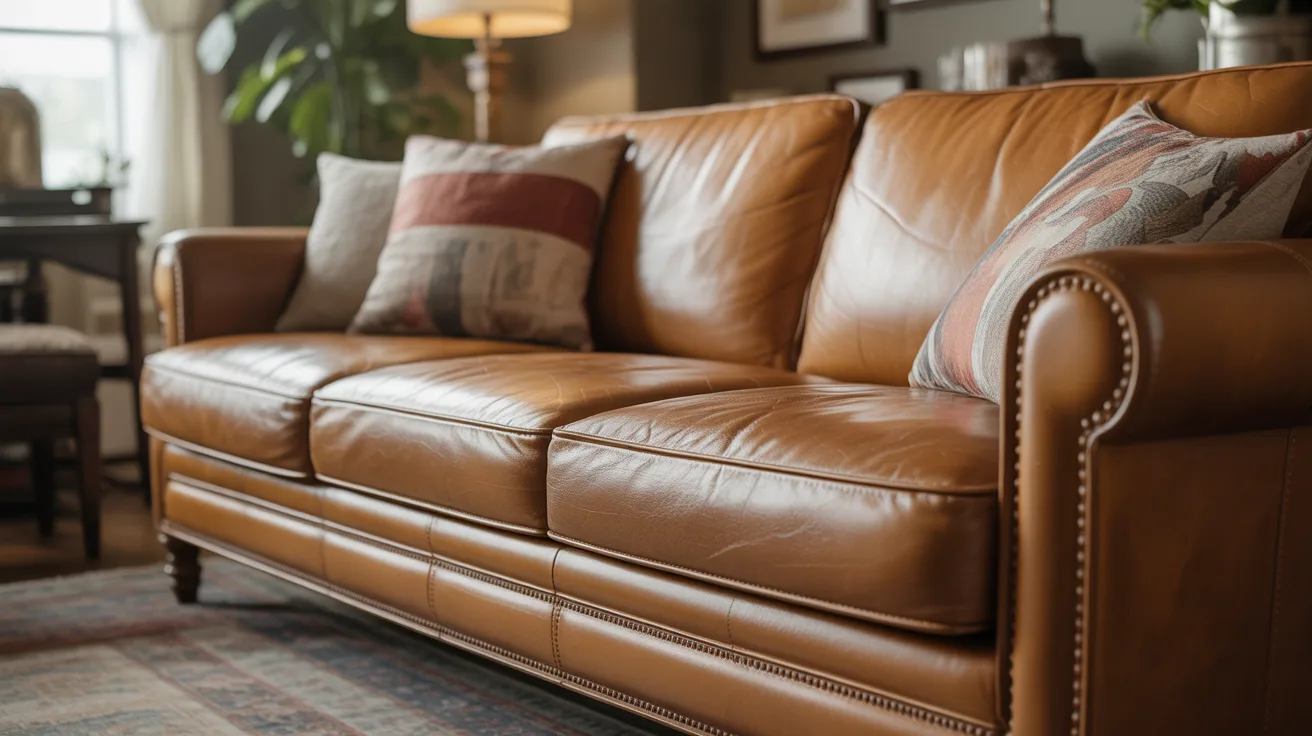
Leather furniture is known for durability and long life. A well-made leather sofa or chair can remain comfortable and structurally solid for many years. Yet over time even high-quality leather pieces begin to show visible signs of wear.
One of the most common signs is fading or worn color on the surface of the leather.
Many homeowners notice lighter areas on armrests, seat cushions, or headrests and assume that the leather itself is damaged or worn out. In reality, what they are seeing is usually something much simpler.
In most cases, worn color means that the protective finish on the leather has gradually worn away.
Understanding this process can help homeowners address the issue early and prevent further damage.
The Protective Layer on Leather Furniture
Most modern leather furniture includes a protective finish applied during manufacturing. This finish acts as a barrier between the leather and everyday use.
The protective layer serves several important purposes:
- It provides the uniform color that gives leather its consistent appearance
- It protects the leather from oils, dirt, and moisture
- It reduces the impact of friction from daily use
- It helps prevent scratches and surface damage
Over time, however, this protective coating begins to wear down.
Armrests and seat cushions experience the most contact. These areas are constantly exposed to friction from clothing, skin, and movement.
As the protective finish gradually fades, the leather surface underneath becomes more exposed.
Why Color Starts to Fade
When the protective coating begins to wear away, the first visible sign is often fading or discoloration.
This happens because the pigment layer that gives leather its color is no longer fully protected.
Once the finish becomes thinner, the color may start to rub off slightly or appear uneven in high-traffic areas.
Homeowners often notice this in places such as:
- the front edge of seat cushions
- the tops of armrests
- areas where the back of the head rests against the sofa
- spots where pets frequently climb or sit
These changes may look like damage to the leather itself, but in most cases the leather remains structurally intact.
The issue is simply that the surface coating has worn away.
Why Ignoring the Problem Can Lead to More Damage
When the protective finish is gone, the leather becomes more vulnerable.
Without that barrier, oils from skin, dirt, and everyday moisture can begin to penetrate the surface. This can lead to further fading, staining, or small cracks over time.
The longer the surface remains unprotected, the greater the chance that deeper damage will occur.
This is why worn color is often a signal that furniture needs restoration rather than replacement.
Addressing the issue early helps preserve the leather and extend the life of the furniture.
How Leather Furniture Is Restored
Professional leather restoration focuses on rebuilding the surface layers that have worn away.
The process usually begins with deep cleaning to remove oils, dust, and residue that accumulate during everyday use. Cleaning prepares the leather for the next stage of restoration.
After cleaning, technicians repair minor surface imperfections such as scratches or small cracks using flexible repair compounds designed specifically for leather.
The next step involves restoring the color. Pigments are carefully matched to the original tone of the furniture and applied in thin layers so the repaired areas blend naturally with the rest of the surface.
Finally, a protective topcoat is applied to seal the color and protect the leather from further wear.
This process restores both the appearance and the protective barrier of the furniture.
Homeowners looking to renew worn surfaces often explore professional Leather restoration services that specialize in refinishing and protecting leather furniture.
Why Restoration Is Often Better Than Replacement
When leather furniture begins to show wear, many people assume that replacement is the only option.
However, in most cases the frame and cushioning of a sofa remain strong even after years of use. The visible wear is usually limited to the surface layer.
Restoration allows homeowners to keep furniture that is already comfortable and fits their space.
Rather than discarding a large piece of furniture, the worn areas are repaired and refinished.
This approach is often more cost-effective than buying a new leather sofa and helps extend the life of existing furniture.
Many homeowners also turn to leather sofa repair services when scratches, fading, or worn armrests begin to appear.
Signs That Leather Furniture Needs Refinishing
There are several common signs that indicate leather furniture may need professional refinishing.
These include:
- fading or uneven color on armrests and seat cushions
- areas where the color appears lighter or rubbed away
- dryness or dullness on the surface
- small scratches that make the furniture look worn
These signs usually indicate that the protective finish has worn down.
Reapplying color and protective coating can restore both the appearance and durability of the furniture.
Maintaining Leather After Restoration
Once leather furniture has been restored, proper care helps keep it looking good for many years.
Regular cleaning removes dust and oils that can damage the finish. Keeping furniture away from direct sunlight can help prevent fading.
Maintaining moderate indoor humidity also helps prevent leather from becoming dry or brittle.
With the right maintenance and occasional refinishing, leather furniture can remain in excellent condition for decades.
Understanding Wear as Part of Furniture Lifespan
All furniture experiences wear over time. Leather furniture is no exception.
However, visible wear does not necessarily mean the material is worn out.
Often it simply means that the protective surface layer needs to be renewed.
Recognizing this difference allows homeowners to make better decisions about their furniture.
Instead of replacing an entire sofa because of surface fading, restoring the color and protective finish can bring it back to life.
In many cases, what looks like the end of a furniture’s lifespan is actually just the beginning of a restoration process that allows it to continue serving the home for many more years.