
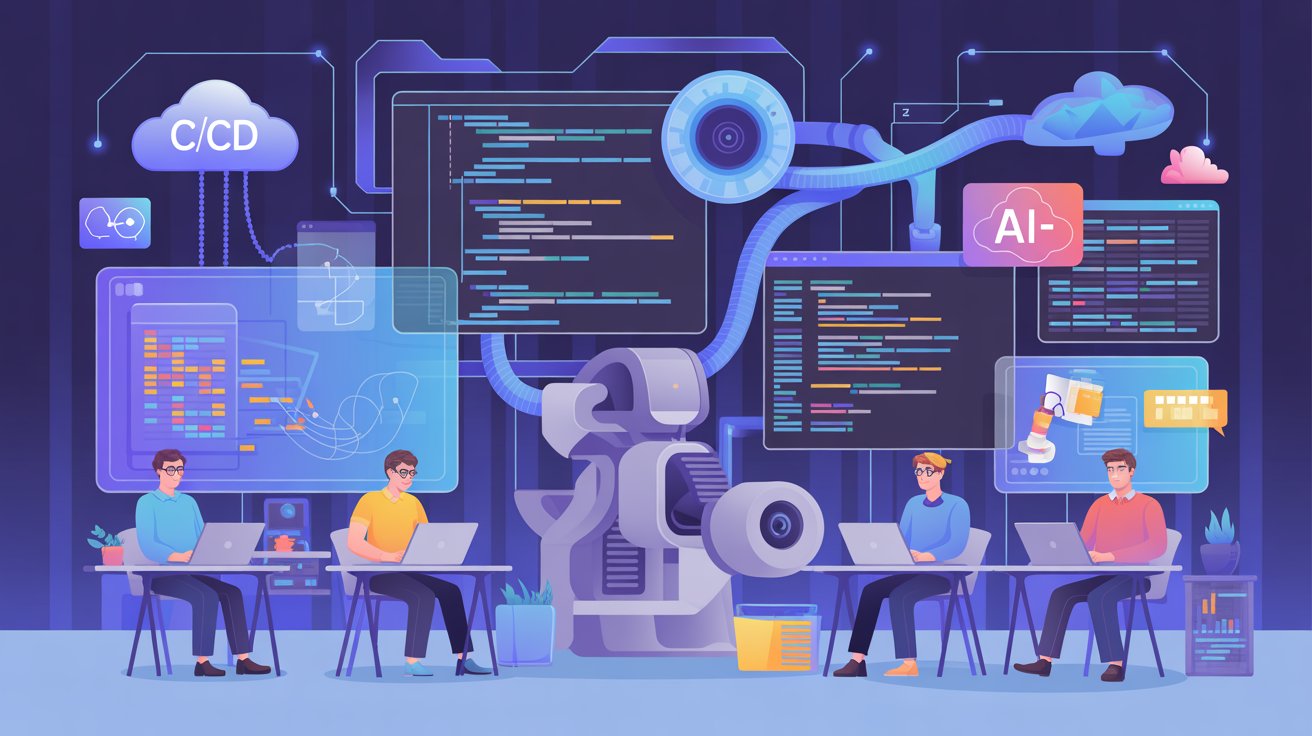
Software development has evolved significantly over the past two decades. What once required lengthy development cycles, manual testing, and complex release procedures has become a faster and more streamlined process. Automation now plays a central role in modern development workflows, helping teams deliver reliable software while reducing manual effort and minimizing the risk of human error.
From writing code to deploying applications, automation tools and processes enable development teams to work more efficiently and maintain consistent quality. Businesses today rely on digital products more than ever, which means software must be stable, scalable, and capable of evolving quickly. Automation helps developers achieve these goals by simplifying repetitive tasks and improving collaboration across engineering teams.
Understanding how automation influences development workflows provides insight into why modern software releases happen faster and with greater reliability than ever before.
The Shift Toward Automated Development Practices
Traditional software development followed a linear process. Developers wrote code, testers manually verified functionality, and releases were scheduled after extensive testing phases. While this approach ensured careful validation, it often slowed down product delivery and made adapting to changing requirements difficult.
Modern development practices emphasize speed, adaptability, and continuous improvement. Automation allows teams to build, test, and deploy applications frequently without compromising stability. Continuous integration and continuous deployment pipelines enable developers to introduce changes quickly while ensuring that software remains reliable.
Automated build systems compile code, run tests, and prepare applications for release automatically whenever updates are introduced. This removes the need for developers to manually perform repetitive tasks and allows them to focus on writing better code and improving features.
As a result, organizations can respond to user feedback faster and release updates more frequently.
Automation in Continuous Integration and Deployment
Continuous integration and continuous deployment, often referred to as CI and CD, represent one of the most important shifts in software development workflows. These practices rely heavily on automation to maintain efficiency and reliability.
Continuous integration ensures that code changes from multiple developers are regularly merged into a shared repository. Automated pipelines then build the application and run validation processes to confirm that new updates do not introduce problems.
Continuous deployment extends this process by automatically delivering verified code to production environments. Once the system confirms that a change passes all required checks, the update can be released without manual intervention.
Automation in CI and CD pipelines improves collaboration between development teams. Developers receive immediate feedback when a change introduces errors, allowing them to fix issues quickly before they escalate into larger problems.
These automated pipelines also reduce deployment risks. Because updates are released incrementally and frequently, each change is easier to verify and manage.
Improving Productivity Through Workflow Automation
Automation improves productivity by removing repetitive tasks that would otherwise consume valuable developer time. Many development processes involve activities that must be performed consistently, such as code formatting, dependency updates, and environment configuration.
Automated scripts and tools handle these tasks quickly and reliably. Developers can configure automation systems to enforce coding standards, monitor application performance, and track system behavior across different environments.
By automating these processes, teams reduce the likelihood of inconsistencies that might arise from manual operations. Automation ensures that tasks are performed the same way every time, which leads to more predictable and reliable results.
Furthermore, automation allows development teams to scale their workflows more easily. As organizations grow and projects become more complex, automated systems help maintain efficiency without requiring proportional increases in manual effort.
Enhancing Collaboration Across Development Teams
Automation also supports collaboration across different roles within the software development lifecycle. Developers, testers, operations engineers, and product managers all contribute to building and maintaining applications.
Automated workflows create shared visibility across teams. When a developer commits new code, automated systems immediately validate it, run tests, and generate reports that everyone involved can review.
This transparency reduces communication gaps and ensures that potential issues are identified early in the development process. Teams can address problems before they affect users or delay releases.
Automation also enables teams to maintain consistent workflows regardless of location. Distributed development teams can collaborate effectively because automated pipelines manage builds, testing, and deployment processes in a standardized environment.
Automation in Quality Assurance and Testing
Testing plays a critical role in ensuring that software functions as expected. In the past, testing often involved manual processes that required extensive effort and time. As applications became more complex, manual testing alone could no longer keep pace with development speed.
Automation has transformed quality assurance by enabling teams to run tests automatically whenever code changes occur. Automated testing frameworks simulate user interactions, validate functionality, and detect issues before applications reach production.
In the middle of modern development pipelines, teams increasingly depend on automated tools for testing to validate application behavior across different environments and scenarios. These tools allow developers to run thousands of tests quickly, helping identify defects early in the development cycle.
Automated testing improves both efficiency and reliability. Instead of repeating the same manual tests after every update, teams can rely on automated systems to verify that key features continue to work correctly.
Many development teams also adopt advanced testing platforms such as testRigor to simplify automation and improve test coverage. These tools allow engineers to create tests using natural language and automate complex testing scenarios that would otherwise require extensive scripting.
With automated testing integrated into development workflows, teams can release software with greater confidence and maintain consistent quality even as applications evolve.
Automation in Customer Support and Product Interaction
Automation is not limited to development and testing processes. Many organizations also use automated systems to support customer interactions and improve product experiences.
Artificial intelligence technologies have enabled automated assistants that can respond to user questions, guide troubleshooting processes, and provide real-time support.
Platforms exploring innovations such as AI chatbots demonstrate how AI-powered chat systems can enhance communication between companies and their users. These systems provide instant responses and help reduce the workload on customer support teams.
When integrated with software platforms, automated assistants can monitor user behavior, detect common issues, and provide helpful guidance without requiring manual intervention.
Reducing Human Error in Software Development
Human error is a natural part of complex processes. In software development, small mistakes can lead to unexpected bugs or system failures if not addressed early.
Automation reduces the risk of such errors by performing tasks consistently and accurately. Automated pipelines ensure that every update goes through the same validation process before reaching production.
For example, automated testing verifies that new features do not break existing functionality. Automated monitoring systems detect performance issues before they affect users.
These safeguards create a more reliable development environment where errors are identified quickly and corrected efficiently.
The Future of Automated Development Workflows
Automation will continue to shape the future of software development. Emerging technologies such as artificial intelligence and machine learning are expanding the capabilities of automated systems, and many businesses now rely on advanced AI writing platforms as an automation tool to streamline e-commerce content creation, product descriptions, and marketing copy.
AI-powered tools can analyze code patterns, predict potential vulnerabilities, and recommend improvements. Automated debugging systems may soon identify issues and generate suggested fixes automatically.
As software systems grow more complex, automation will become even more essential for maintaining quality and efficiency. Development teams will increasingly rely on intelligent automation platforms to manage large-scale applications and deliver updates rapidly.
The integration of automation with cloud computing, containerization, and microservices architecture will further enhance the flexibility of development workflows.
Organizations that adopt automation effectively will be better positioned to innovate and adapt to changing technological landscapes.
Conclusion
Automation has fundamentally transformed software development workflows. By streamlining repetitive tasks, enabling continuous integration and deployment, and improving testing processes, automation allows teams to build and release software more efficiently.
Modern development environments rely on automated pipelines that manage builds, validate code changes, and deploy applications with minimal manual intervention. These systems improve collaboration, reduce human error, and ensure that software remains stable even as it evolves.
As technology continues to advance, automation will play an even greater role in shaping the future of software engineering. Development teams that embrace automated workflows will be able to deliver reliable, high-quality applications while responding quickly to new opportunities and challenges.