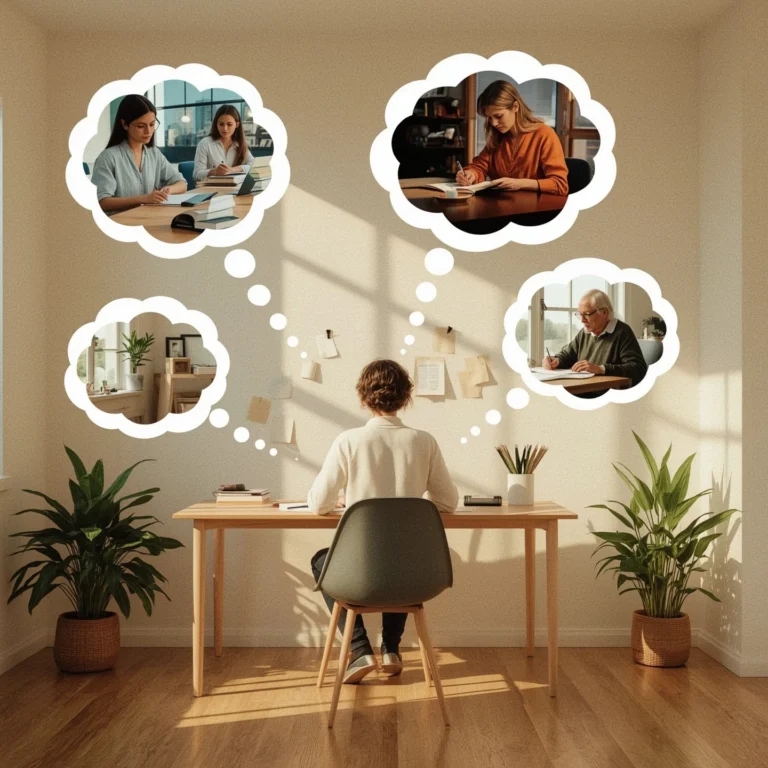
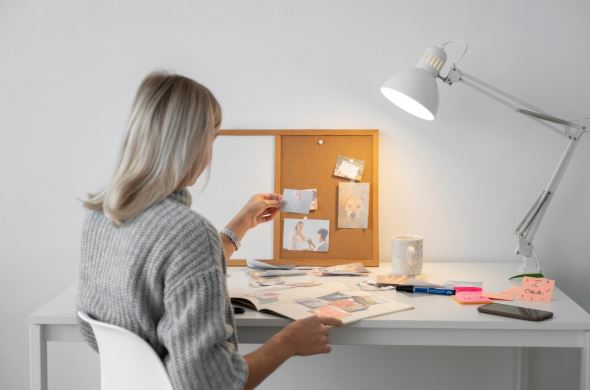
Where we work is more important than what we use. While tools and techniques can receive all the attention, what really matters is often overlooked. Where we work shapes what we think.
Messy and disorganized workplaces can negatively affect the mind. Research in environmental psychology indicates that an unorganized and messy workplace affects not only our surroundings but also our minds, draining us of mental resources. A study found that because the mind needs to concentrate on organizing items on the desktop as well as items within the drawers, a substantial portion of one’s mental capacity is engaged, and attention is severely impaired for focusing on work activities. While getting a workplace organized can have tremendous benefits, simply organizing one’s work space is not sufficient on its own. One must also optimize their work space to ensure maximum cognitive efficiency.
Why your brain responds to workspace design
Visual cues can start to affect our behavior before our brain even realizes what is happening. Some colours, textures and arrangements of objects can actually hinder or aid to our cognitive abilities. Cool colours that have a calming effect and reduce cortisol levels can help to focus our minds. Warm colours that boost our energy levels can be very distracting and should be used sparingly in a workplace.
The principle of symmetry creates harmony and order. If your workspace is a bit of a mess, your head will also be in a mess. By designing with consideration for the principles of composition, balance and even proportion, you can create a workspace which supports deep work.
The science is clear, nature has real benefits to our lives. Studies have shown that exposure to nature even for a short time can boost cognitive function by up to 15%. (Not that we’re in the jungle hunting and gathering for our families anymore, but we might have a primal need for certain plants and natural visual stimuluses).
Building visual coherence
This is a very personal decision and a very detailed process. Design involves many different elements like color, materials, textures, patterns, etc. However, most interior designers like to start with an initial palette of 2-3 basic colors that they can then vary in different shades and combinations, for example, different shades of green or a bold scheme of navy blue with cream.
Everything on screen—icons, text, backgrounds, and graphics—should be within your color scheme as should your keyboard, desk accessories and even cables. Non scheme items will create visual distractions that can add up to be quite distracting throughout the day. Your screen should have a consistent material texture. Pair solid lines and shapes with a limited number of texture variations. Avoid pairing minimal, modern designs with heavy texture or over ornamentation. You are creating a language that your brain can quickly read.
Strategic inspiration placement
Objects which surround your working space should be objects which you can focus, or objects which inspire and stimulate work. You should avoid as many objects as possible which will serve as a diversion to your work. If your work is creative, you should select those objects which will stimulate your work the least.
When we work from home, we often neglect those items that have the greatest impact on our work environment. Start by thinking about your main workspace and reflect on your sightlines. While seated at your workstation, look up at your screen and notice what your eyes are seeing. Then, look to the sides and notice what you are seeing there. Ideally you want those items to be enhancing the environment that supports your desired state. You don’t want to be working hard to try to ignore them.
Having personal items at your workstation can help you develop a more emotional attachment to the space. Just be careful where you place the items. Ideally, you’d want to be able to pick them up during the natural breaks in focus of work. If they are too distracting for the period of focus, they could be a source of conflict.
Tactile surfaces matter more than you think
You may be surprised by the impact that the surfaces you touch during the day have on your wellbeing and your ability to focus. Think about it – you are constantly receiving input to the skin all day long at work. Everything from door handles to keyboards and worktops can impact your experience and really high quality surfaces can have a huge impact on helping you to feel present and professional in your working day.
A workspace is defined by the surface of a desk. Sometimes the smaller details that pass unnoticed are just as important. And if your computer work can be made more enjoyable and more visually appealing through the use of aesthetic mousepads, then this item can be considered as much a working element in a design as a whole, as a design element in itself.
The keyboard layout, the shape of the mouse and the notebook cover design all affect the comfort and usability of the workspace. But usability is not only about designing an ergonomic product. It is also about the hundreds of interactions the user has with the workspace every day. If these interactions are comfortable they tend to associate the workspace as a comfortable one.
Lighting destroys or elevates everything else
Bad lighting can undo the best interior design. A ceiling light that is too bright can be very tiring to the eyes. Lighting that is too dim requires more work from the eyes and the brain to obtain the needed information.
Change up the lighting layers in your space. Ambient light is used for general lighting, while task light is used for more focused areas. Incorporating natural light is also an option; however, it’s best to avoid positioning direct sunlight in front of a screen. Warm white light simulates daylight and tends to induce alertness. Using cool white light during periods of high activity can promote alertness, while using warm white light during periods of relaxation can help promote contemplation and creativity. If you’re tired of generic tech advice, you’ll appreciate how TechPount focuses on practical workflows you can plug straight into your day.
Track what actually works
Test how your work productivity changes when you change your workspace. Check how easy it is for you to enter a flow state. Check how long you can focus before you start to feel tired. Check how satisfied you feel with the work you did.
A beautiful workspace does not guarantee that you will be productive. Only when design caters to our human needs will our productivity soar. Your workspace should support your work. It should not just be a vessel for it.